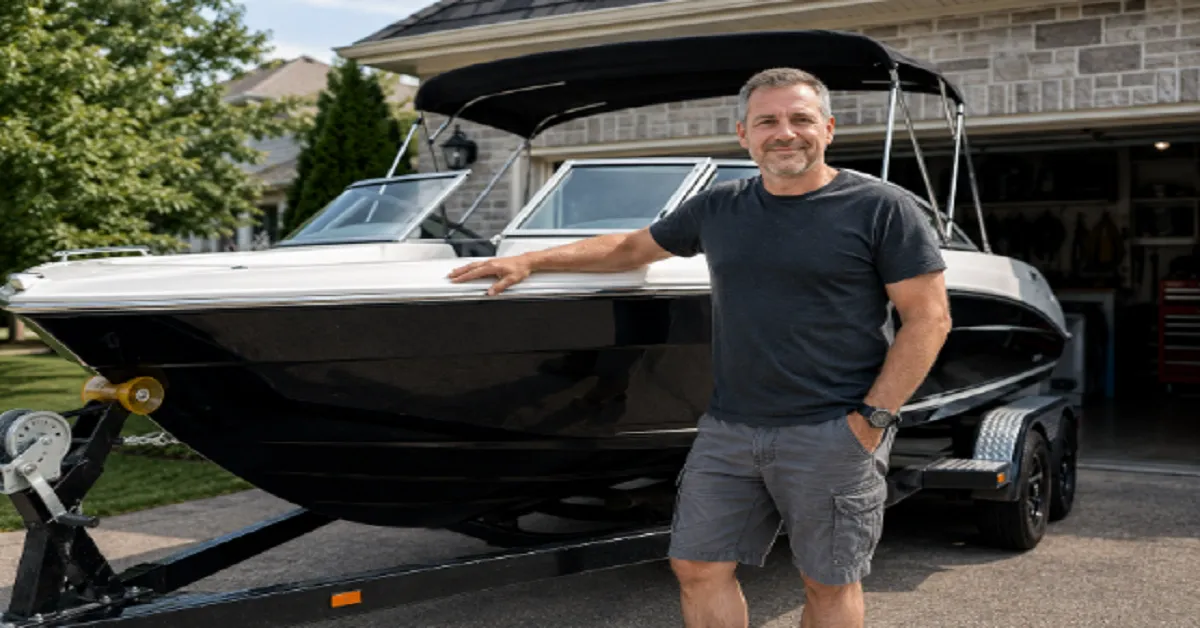
For many men, there is a project that sits permanently in the back of their mind. Sometimes it is a garage transformation that finally turns into a real workshop. Sometimes it is a fishing boat that has been bookmarked online for years. For others, it is a basement sports lounge, a custom trailer, a home gym, a motorcycle restoration project, or finally building the backyard entertainment space they always wanted.
The challenge is that major personal projects rarely happen at convenient financial moments.
Over the last several years, Canadians have faced rising costs across almost every category of life. Groceries are more expensive. Insurance costs continue increasing. Housing expenses remain elevated. Vehicle ownership has become more costly. Even households earning solid incomes are paying closer attention to cash flow and discretionary spending than they did previously.
As a result, many homeowners are now approaching passion projects differently than they did a decade ago. Instead of draining savings accounts or carrying large balances on high-interest credit cards, more Canadians are looking for financially structured ways to complete meaningful projects while protecting long-term financial stability.
One option increasingly being explored is the strategic use of home equity.
For homeowners who have built substantial equity over time, leveraging part of that equity can sometimes create a more manageable path toward larger purchases or renovations. Rather than liquidating investments or exhausting emergency savings, some homeowners are choosing structured financing solutions that allow them to preserve liquidity while completing projects that improve their lifestyle or property value.
Importantly, this shift is not only about luxury spending. In many cases, these projects reflect how people actually use their homes and recreational time today.
The garage, for example, has evolved beyond simple vehicle storage. For many men, it has become a workshop, fitness space, business hub, or hobby center. Home offices have become permanent fixtures in many households. Outdoor entertainment spaces now function as extensions of the home itself. Recreational equipment and trailers are also being used more frequently as Canadians prioritize local travel and outdoor experiences.
This has changed how homeowners think about financing.
Historically, people often viewed financing primarily through the lens of emergency borrowing or major home purchases. Today, homeowners are increasingly thinking strategically about how to use existing assets to support lifestyle goals without creating unnecessary financial strain.
The key distinction is financial structure.
Using high-interest unsecured debt to finance large discretionary projects can quickly create pressure on monthly cash flow. Carrying substantial balances on credit cards or short-term loans often leads to long repayment periods and significant interest costs. That is why many homeowners are evaluating alternatives that may provide lower monthly payment structures and greater predictability.
For larger projects, some homeowners are exploring solutions tied to home equity through providers specializing in mortgage loans. Depending on the homeowner’s situation, this can sometimes provide a more manageable financing structure than unsecured borrowing.
This is particularly relevant for self-employed individuals, contractors, entrepreneurs, and commission-based professionals who may have strong equity positions but experience more complexity when dealing with traditional bank qualification models.
Many Canadians in these categories have healthy incomes and substantial assets but do not always fit neatly into conventional lending formulas. That has increased awareness around alternative lending solutions that focus more heavily on equity position and property value rather than rigid income documentation alone.
The rise of passion-project financing also reflects a broader cultural shift happening among homeowners.
More people are investing in experiences, hobbies, and home functionality rather than purely status-driven spending. A garage renovation may support a side business. A trailer may support family travel and outdoor recreation. A basement transformation may create a more enjoyable living environment that reduces the desire for expensive nights out or frequent travel.
In many situations, homeowners view these investments as improving overall quality of life rather than simply purchasing luxury items.
Of course, responsible financial planning still matters.
Financial professionals consistently emphasize that financing should support long-term stability rather than undermine it. The objective is not to overextend financially. It is to structure spending intelligently and sustainably.
That means evaluating monthly payment comfort, understanding borrowing costs, maintaining emergency reserves, and ensuring that financing decisions align with broader financial goals.
For some homeowners, using savings may still make the most sense. For others, preserving liquidity while using structured financing may provide greater flexibility, particularly during periods of economic uncertainty.
Inflation has also changed the psychology around spending. Canadians today are more conscious of how quickly cash reserves can disappear when unexpected expenses arise. Vehicle repairs, temporary work interruptions, medical costs, or home maintenance emergencies can create significant pressure if all available liquidity has already been committed elsewhere.
As a result, many homeowners are intentionally preserving larger cash reserves even while pursuing meaningful projects or lifestyle upgrades.
This is one reason financing conversations have become more practical and less emotionally driven than in previous years. Homeowners are increasingly approaching borrowing through the lens of cash flow efficiency rather than simply focusing on whether they can technically afford a purchase.
The recreational market itself has also expanded significantly in Canada.
Boating, camping, trailers, motorcycles, ATVs, and outdoor lifestyle equipment all saw substantial growth over recent years as Canadians prioritized domestic travel and outdoor recreation. Even as economic conditions tightened, many consumers continued prioritizing experiences and hobbies that improve day-to-day life and family connection.
For some homeowners, financing these purchases through structured lending simply became part of smarter financial planning.
That does not mean every project needs financing. However, for larger investments, homeowners are increasingly comparing the long-term cost and flexibility of different funding approaches before making decisions.
This includes evaluating payment size, repayment flexibility, impact on monthly budgeting, and overall financial sustainability.
Another important factor is property value enhancement.
Certain passion projects also improve the long-term usability and value of a property. Garage upgrades, basement renovations, outdoor entertainment areas, workshops, and home gyms can all increase functionality and market appeal depending on the quality and nature of the improvements.
In those situations, homeowners sometimes view financing as both a lifestyle investment and a property investment.
This perspective has become more common as people spend more time at home and place greater value on personal living environments.
At the same time, financial flexibility remains critical.
That is why homeowners increasingly seek financing solutions that align with realistic monthly budgets rather than simply maximizing borrowing potential. The most financially successful projects are usually the ones completed within a structure that remains comfortable and sustainable long after the excitement of the purchase fades.
Alternative lenders have become part of this evolving financial landscape because they often provide flexibility for borrowers whose financial situations may not fit traditional banking criteria perfectly.
That has increased visibility for firms like private lender Ontario providers, particularly among self-employed homeowners and individuals with strong equity positions seeking practical financing solutions.
Importantly, responsible borrowing always requires thoughtful planning.
Homeowners should evaluate repayment timelines, monthly affordability, long-term financial goals, and potential risks before committing to any financing arrangement. Passion projects should improve quality of life, not create unnecessary financial stress.
Still, there is no question that Canadians are rethinking how they approach major discretionary spending.
Instead of viewing projects as all-or-nothing financial decisions, many homeowners are now approaching them strategically. They are balancing liquidity, cash flow, long-term stability, and lifestyle goals simultaneously.
That shift reflects a broader evolution in personal finance.
Today’s homeowners are not necessarily spending recklessly. In many cases, they are becoming more financially sophisticated by focusing on structure, flexibility, and sustainability rather than relying exclusively on cash depletion or high-interest unsecured debt.
For many men, the dream project is not simply about ownership. It is about building something meaningful, improving how they spend their time, and creating spaces or experiences that genuinely add value to their lives.
The smartest financial decisions are often the ones that allow people to pursue those goals responsibly while still protecting long-term financial health.
In today’s economy, that balance matters more than ever.